
Luxury bathroom tiles combine superior materials, elegant design, and long-term durability to transform your bathroom into a sophisticated retreat. Premium porcelain and natural stone tiles outperform standard options by offering water absorption rates below 0.5%, lifespans exceeding 50 years, and design versatility that ranges from bold marble veining to handcrafted zellige textures. When you invest in high-quality tiles and professional installation, you get a bathroom that looks stunning on day one and stays that way for decades.
- What Makes Bathroom Tiles Luxury Grade?
- How Do Luxury Tiles Compare to Standard Options?
- Why Do Large Format Tiles Speed Up Installation?
- What Features Define Premium Bathroom Tiles?
- How Long Do Luxury Bathroom Tiles Last?
- Top Luxury Tile Trends for 2026
- Frequently Asked Questions
What Makes Bathroom Tiles Luxury Grade?
Luxury bathroom tiles earn their designation through measurable performance characteristics, not just aesthetics. The primary distinction lies in how the tile is manufactured and the materials used.
According to ANSI A137.1 standards, porcelain tile must have a water absorption rate of 0.5% or less when tested under ASTM C373 protocols. This impervious quality means moisture cannot penetrate the tile body, preventing the structural damage and mold growth that plague lesser materials. Standard ceramic tiles, by comparison, can absorb anywhere from 3% to over 7% water, making them far more vulnerable in wet bathroom environments.
Premium porcelain tiles are fired at temperatures around 2,250°F, creating a denser, harder product than ceramic alternatives. This extreme heat causes the clay particles to vitrify, producing a tile that resists scratches, chips, and staining throughout its lifespan. The density also means through-body porcelain maintains its color even if the surface gets scratched—a crucial advantage in high-traffic bathroom floors.
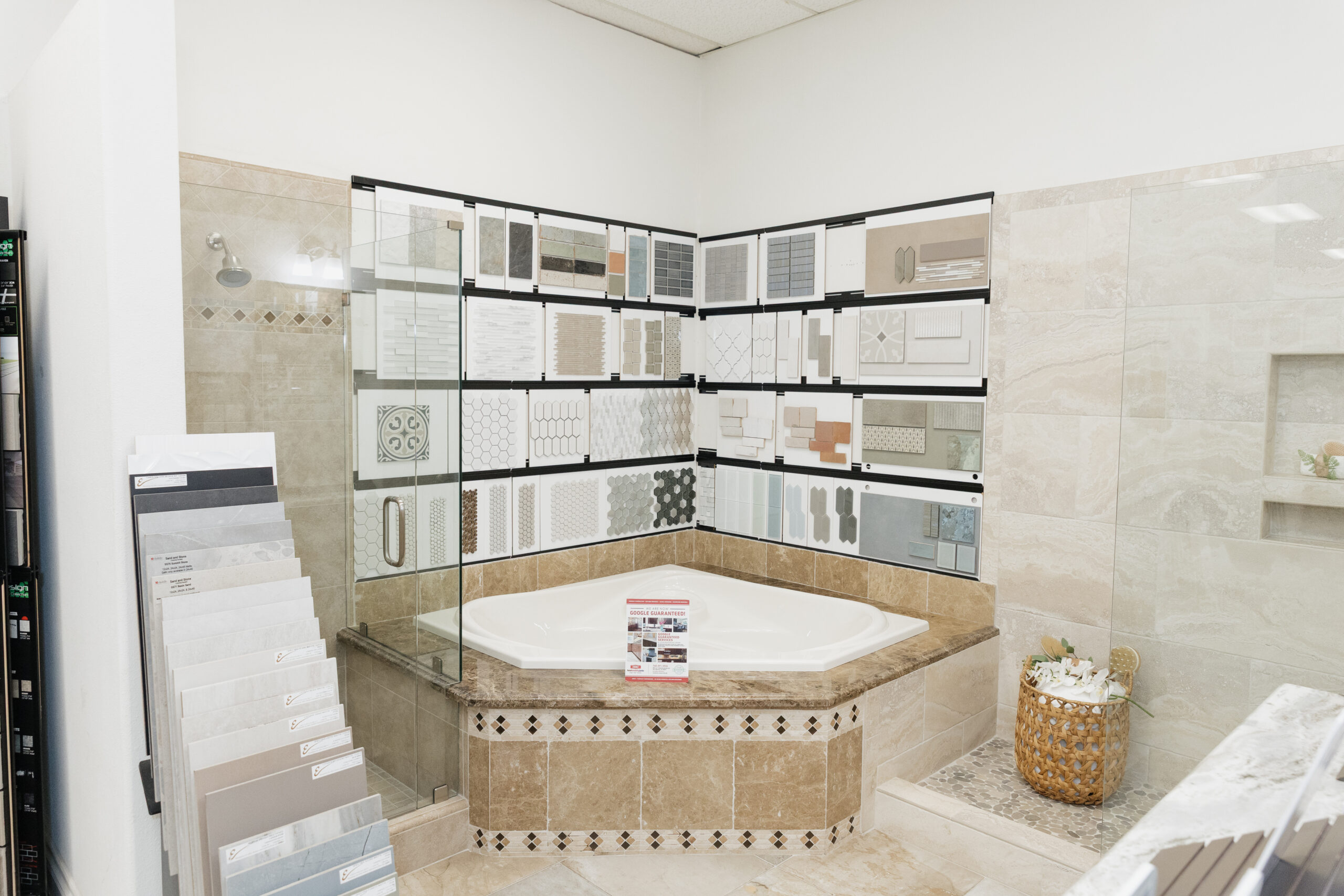
How Do Luxury Tiles Compare to Standard Options?
The gap between premium and budget tiles becomes apparent in several key performance areas that affect your bathroom remodel for years to come.
Water Resistance
Porcelain’s low porosity makes it ideal for showers, floors, and wet areas. It can handle constant water exposure without compromising its structural integrity. Ceramic tiles work adequately on bathroom walls when properly sealed, but they’re not the best choice for shower floors or areas with standing water.
Durability Under Foot Traffic
The Porcelain Enamel Institute (PEI) rates tile abrasion resistance on a scale of 1 to 5. Luxury porcelain floor tiles typically carry PEI ratings of 4 or 5, suitable for heavy residential and commercial traffic. A PEI rating of 3 is considered adequate for residential floor tile, according to industry guidelines published by Mission Tile West. Lower-rated tiles may show wear patterns within a few years of installation.
Cost vs. Long-Term Value
Luxury tiles cost more upfront—often 20% to 50% higher per square foot than standard ceramic. But here’s the calculation most homeowners miss: porcelain floors can last 50 years or more with proper care. Cheaper ceramic tiles, especially in high-use bathrooms, may need replacement within 15-20 years. When you factor in removal, disposal, new materials, and labor for a mid-project replacement, the premium tile often costs less over the life of your home.
Why Do Large Format Tiles Speed Up Installation?
Large format tiles—typically defined as any tile with one side exceeding 12 inches—have become the standard in luxury bathroom design. Beyond their visual appeal, these oversized tiles offer practical installation advantages.
Fewer tiles mean fewer grout lines. A 24″×24″ tile covers the same area as sixteen 6″×6″ tiles but requires only a fraction of the grouting work. This reduction in grout lines delivers two benefits: faster installation time and a more seamless, easier-to-clean finished surface.
Modern rapid-setting mortars designed for large format tiles allow grouting in as little as three hours after tile placement. According to Custom Building Products’ technical specifications, surfaces can be open for heavy commercial traffic within 24 hours of grouting. For homeowners, this translates to dramatically shorter project timelines compared to traditional installations.
The key requirement for large format installation is substrate preparation. ANSI specifications recommend that the substrate have no more than a 1/8″ variance over 10 feet. When experienced installers work with properly prepared surfaces, large tiles go down quickly and deliver that spacious, hotel-quality look that defines luxury bathroom design.
What Features Define Premium Bathroom Tiles?
Several characteristics separate luxury bathroom tiles from standard options. Understanding these features helps you evaluate products and make informed decisions.
Through-Body Construction
Premium porcelain tiles often feature through-body coloring, meaning the color and pattern extend throughout the entire tile thickness. If the tile chips or scratches, the damage is far less visible than on glazed tiles where the color sits only on the surface. This feature is especially valuable on floor tiles and shower curbs where edge chips can occur.
Calibrated Sizing
Luxury tiles are rectified—machine-cut to precise dimensions after firing. This calibration allows for minimal grout joints (as narrow as 1/16″ in some applications) and perfectly aligned edges. Budget tiles often have slight size variations that require wider grout lines to compensate.
Slip Resistance
Premium bathroom tiles are tested for dynamic coefficient of friction (DCoF) under wet conditions. According to ANSI standards, the passing threshold is an average score of 0.42 or higher, indicating adequate slip resistance for wet bathroom floors. Quality manufacturers provide these test results for every product line.
Design Authenticity
High-end porcelain now replicates natural materials with remarkable accuracy. Marble-look porcelain offers the aesthetic of Calacatta or Carrara without the maintenance demands of natural stone. Wood-look tiles bring warmth to bathroom spaces without the moisture concerns of real hardwood. The technology behind these designs has advanced to the point where texture, veining variation, and surface reflection closely match natural materials.
How Long Do Luxury Bathroom Tiles Last?
Properly installed luxury tiles are among the longest-lasting materials you can put in a bathroom. The lifespan depends on material choice, installation quality, and maintenance habits.
A professionally installed tile floor can last 20 to 50 years depending on material quality, maintenance, and environmental conditions. High-quality porcelain tile is denser, less porous, and more resistant to moisture and heavy traffic compared to ceramic tile, which is why experts recommend it for bathroom applications.
Glazed ceramic, porcelain, and terra cotta floor tiles generally have a lifespan of 50 years or more when properly maintained. The typical lifespan of a tile shower is 40 to 50 years, with additional maintenance such as grouting and sealing required every few years to maintain waterproof integrity.
Several factors influence how long your tiles will actually last:
- Installation quality: Tiles laid on a solid, waterproof substrate with proper adhesive and mortar coverage last far longer than rushed installations. For large format tiles, 90% mortar contact is the industry standard.
- Grout maintenance: Standard cement-based grout typically lasts 8 to 15 years in shower applications. Epoxy grout can maintain its integrity for 20 years or more with proper care. Resealing grout every one to two years prevents moisture infiltration.
- Tile material: Porcelain outperforms ceramic in wet environments. Natural stone tiles like marble and travertine require more frequent sealing but can last 40-45 years or longer when properly maintained.
Top Luxury Tile Trends for 2026
This year’s premium bathroom tile trends emphasize texture, natural materials, and bold character. According to design publications including Forbes and Elle Decor, the shift is moving toward materials that feel more “human”—natural stone, zellige, and surfaces with visible variation.
Tile Drenching
Tile drenching embraces using the same tile across floors, walls, and shower areas, creating a continuous, uninterrupted flow. Large format options paired with minimal grout lines enhance the sense of space while offering both durability and elegance. This technique transforms bathrooms into seamless retreats rather than rooms divided by material transitions.
Bold Stone Veining
Marble remains a timeless foundation in bathroom design, but 2026 leans toward bolder, more expressive stone. Designers are embracing deeply veined slabs and tiles with high contrast and movement. These richer, earthier veining palettes bring warmth and drama, offering a more grounded alternative to the cooler, minimal marbles that dominated previous years.
Textured Artisanal Finishes
Fluted tiles create unique wall coverings with texture and shape. These thin linear tiles with rounded edges offer a multi-dimensional look to bathroom walls. Zellige-style tiles and handmade textures are being introduced in small, impactful moments—within niches, behind basins, or framed within shower recesses—balanced with more restrained tiles elsewhere.
Earth-Tone Minimalism
The movement toward serene, nature-inspired interiors continues to solidify its place as a leading tile trend. This aesthetic creates warmth and tranquility by blending a palette of terracotta, ochre, warm grays, and soft whites with subtle geometric patterns that add interest without overwhelming the senses.
Frequently Asked Questions
Can I install luxury tiles over existing bathroom flooring?
It depends on the existing surface. Installation over existing tile is possible if the current floor is level, firmly bonded, and in good condition. However, adding a second tile layer raises floor height, which can create issues with door clearances, toilet flanges, and transitions to adjacent rooms. A professional assessment determines whether overlay installation is feasible or if removal is the better approach.
Are porcelain tiles slippery when wet?
Not if you choose the right finish. Polished porcelain can be slippery, but textured, matte, and anti-slip porcelain tiles are specifically designed for wet areas. Look for tiles with a DCoF rating of 0.42 or higher for bathroom floors and shower pans. Many luxury porcelain lines offer the same design in multiple finishes so you can use a polished version on walls and a textured version on floors.
How often should bathroom tile grout be resealed?
Standard cement-based grout in shower areas should be resealed every one to two years to maintain its water resistance and prevent staining. Epoxy grout requires less frequent maintenance due to its inherent moisture resistance. If you notice grout absorbing water rather than beading it, that’s a sign resealing is overdue. Regular sealing extends grout lifespan from the typical 8-15 years to 20 years or more.
What’s the price difference between ceramic and porcelain tiles?
Porcelain tiles typically cost 20% to 50% more than comparable ceramic tiles. A mid-range ceramic tile might run $3-$5 per square foot, while quality porcelain ranges from $5-$10 per square foot. Luxury porcelain and natural stone can exceed $15-$25 per square foot. The price gap narrows considerably when you factor in porcelain’s longer lifespan and lower long-term maintenance costs.
Do luxury tiles require special cleaning products?
No. One advantage of premium porcelain is its low maintenance requirements. Regular sweeping and mopping with a mild pH-neutral cleaner keeps most porcelain tiles in excellent condition. Avoid acidic cleaners on natural stone tiles, as they can etch the surface. The key is consistency—regular light cleaning prevents buildup that requires harsh scrubbing later.
Ready to upgrade your bathroom with premium tiles? Home Remodeling Center specializes in luxury bathroom renovations featuring high-quality tile selections that deliver lasting beauty and performance. Our team helps you choose the right materials for your style, budget, and lifestyle—then handles professional installation to ensure your investment lasts for decades. Contact us today for a consultation and discover how luxury bathroom tiles can transform your home.